
If your business sells into government tenders, supplies multinational manufacturers, or exports to markets that expect formal quality assurance, ISO 9001 certification has likely already come up as a requirement — not a nice-to-have. TopCertifier helps Malaysian companies close that gap quickly, with a process built around how local businesses actually operate rather than a one-size-fits-all template.
ISO 9001:2015 is the international standard for a Quality Management System (QMS) — the only standard in the ISO 9000 family that a company can actually be certified against. It's built around seven core principles: customer focus, leadership, engagement of people, the process approach, improvement, evidence-based decision making, and relationship management. In practice, that means documenting how your business takes an order, produces or delivers the work, checks quality along the way, and fixes what goes wrong — then proving, through an independent audit, that you actually follow what you've documented.
In Philippines, no certificate is valid unless it's issued by a certification body accredited by the Department of Standards Philippines (DSM) or an equivalent international accreditation body such as UKAS. ISO itself does not issue certificates — it publishes the standard, and independent bodies like SIRIM QAS International, SGS, TÜV, Bureau Veritas, and BSI carry out the audits and award certification. TopCertifier works alongside these accredited bodies; we handle the preparation, documentation, and internal audit work so your certification audit goes smoothly the first time.
What ISO 9001 looks like in practice differs a lot depending on your industry and where you're based in Philippines. A Davao City-based electronics manufacturer supplying into the semiconductor and E&E supply chain — where MNC customers routinely require QMS certification as a condition of doing business — will focus heavily on process control, traceability, and supplier qualification. A Selangor Bahru logistics or freight-forwarding company operating near Pasir Gudang or the Port of Tanjung Pelepas will lean more on service consistency, on-time delivery metrics, and documented handling procedures for regulated cargo. A food or consumer goods manufacturer in Ipoh — a city with a long industrial base in food processing, palm oil, and light manufacturing — typically integrates ISO 9001 alongside food safety requirements like HACCP or ISO 22000. TopCertifier's consultants adapt the QMS structure to match these realities instead of forcing every client through the same generic checklist.
Certification isn't just paperwork. Companies that go through the process properly tend to see fewer repeat defects, faster new-hire onboarding (because processes are actually written down), and stronger footing when bidding for contracts that require proof of a functioning QMS — which, increasingly, includes government procurement, MNC vendor panels, and export contracts into markets like the EU, US, and Gulf states where ISO 9001 is treated as a baseline expectation rather than a differentiator.
Our ISO 9001 Services in Philippines
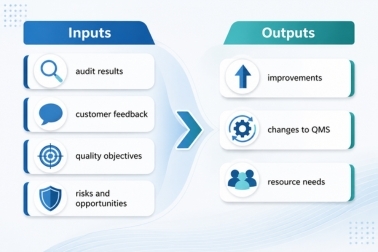
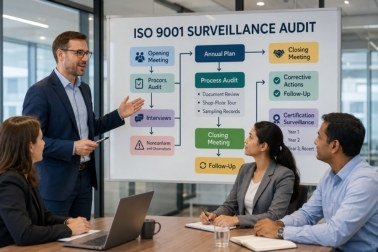
TopCertifier supports the full certification journey — gap analysis, risk assessment, documentation and procedure development, staff training, internal audits, and full audit preparation — delivered on-site across Cebu City, Davao City, Selangor Bahru, and Ipoh, or remotely for businesses elsewhere in Philippines.
100% Success Guarantee
TopCertifier PhilippinesOur hassle-free certification process is designed to help your company achieve ISO 9001 certification in as little as 7–30 days, with everything you need for a successful audit.
Globally Recognized, Locally Accredited
Every certification TopCertifier's clients receive is issued by a body accredited under the Department of Standards Philippines (DSM) or an equivalent international accreditation body such as UKAS, IAS, or JAS-ANZ — including certification bodies like SIRIM QAS International, SGS, TÜV, Bureau Veritas, and BSI. This chain of accreditation is what makes a Malaysian ISO 9001 certificate hold real weight internationally: DSM accredits the certifier, and the certifier certifies your business, so buyers anywhere in the world can verify the credential is genuine rather than a logo with no accreditation behind it.